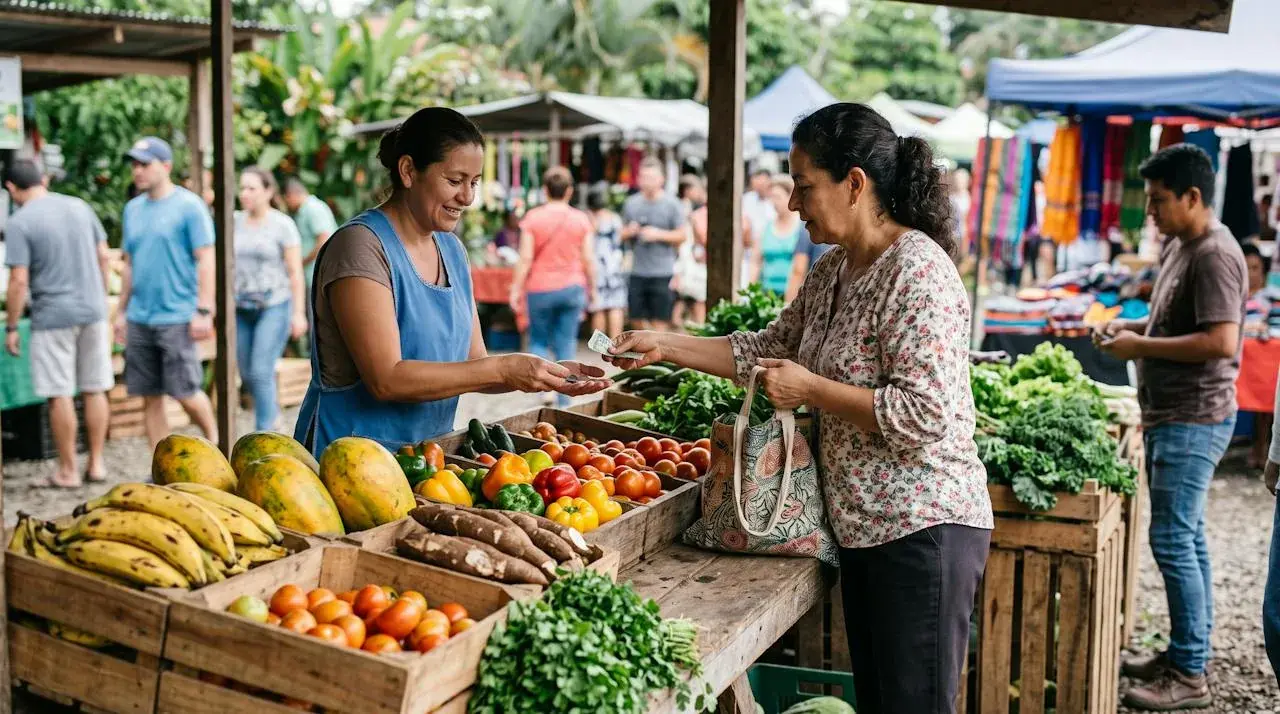
Ask ten people what it costs to live in Costa Rica and you'll get ten numbers — most of them wrong, and most of them too low. The honest version: most couples live comfortably on $2,500–$3,500 a month, and singles on $1,600–$2,500, often 25–50% less than a similar life in the US or Canada. But that range swings hard depending on one thing almost nobody asks about first — where you choose to live.
Here's the real cost of living in Costa Rica in 2026, the way we explain it to clients before they move — including the costs that quietly wreck budgets.
So what does it actually cost?
There isn't one number, there are three, and they track your lifestyle more than the country. Budget-conscious — inland, local food, buses, no AC — one person can manage on roughly $1,600–$2,200. Comfortable — a car, private health insurance, a newer rental, eating out regularly — most couples land between $2,500 and $3,500. Coastal and comfortable — a Pacific beach town with the AC running — and you're often looking at $4,000–$5,000 or more.
A realistic monthly budget for a couple
Here's a mid-range Central Valley budget for two people. Treat it as a starting point, not a promise — your number moves with your rent and your habits.
| Monthly expense | Typical range (USD) |
|---|---|
| Rent (2-bed, long-term) | $700 – $1,800 |
| Utilities (power, water, internet) | $120 – $250 |
| Groceries | $400 – $600 |
| Private health insurance (couple) | $150 – $350 |
| Transport (fuel or buses/taxis) | $150 – $350 |
| Dining, fun, phone, extras | $300 – $600 |
| Rough total | $1,820 – $3,950 |
Figures verified October 2026 and rounded. Prices in Costa Rica shift with the exchange rate and inflation, so always treat any budget — including this one — as a range.
Where you live changes everything
This is the part the glossy articles skip. The Central Valley — San José's suburbs, the Western Valley towns — sits at 3,000–5,000 feet, stays spring-like year-round, and needs no air conditioning. Power bills there run roughly $35–$80 a month.
Reality check: The beach is more expensive than the mountains, not less. In hot, humid Guanacaste and the Pacific coast, air conditioning can push electricity to $150–$250+ a month, and beach towns run about 10–25% higher overall on rent, dining and imported goods. The postcard costs extra.
The costs almost nobody budgets for
A car. Costa Rica taxes imported vehicles heavily — roughly 50% to 79% depending on the car's age — so the same vehicle costs far more here than in the US, and fuel carries about a 65% tax on top. A car is often the single biggest line nobody plans for.
Bringing your stuff. Shipping a household and importing belongings comes with duties that surprise people. Private school, if you have kids, is a real monthly number. And the one almost everyone forgets: the cost of leaving and coming back — flights home for holidays, family emergencies, and the visa runs some people do before they sort out residency. For how the categories actually work, see our guide to Costa Rica residency pathways.
From experience
The clients who blow their budget almost always do it in the same two places: the car and the electric bill. They price out a beautiful beach rental, forget that keeping it cool all day is a second rent, and buy a vehicle expecting US prices. Get those two right and the rest of your budget tends to behave.
Rent before you commit to a number
The best way to find your real cost of living in Costa Rica isn't a spreadsheet — it's a few months on the ground. Regions feel completely different once you live in them, and the budget that works in Atenas is not the budget that works in Tamarindo. Rent for a year before you buy anything. It's the single most common expensive mistake we help people avoid, and a scouting trip is the cheapest way to pressure-test your number before you commit.
The bottom line
Plan on $2,500–$3,500 a month for a comfortable life as a couple, less inland and solo, more on the coast — and budget honestly for the car and the AC. Costa Rica genuinely can cost less than home. It just won't be the single magic number you read somewhere, and anyone who gives you one without asking where you want to live is guessing. If you want help pressure-testing your own number, book a free call and we'll talk it through.